
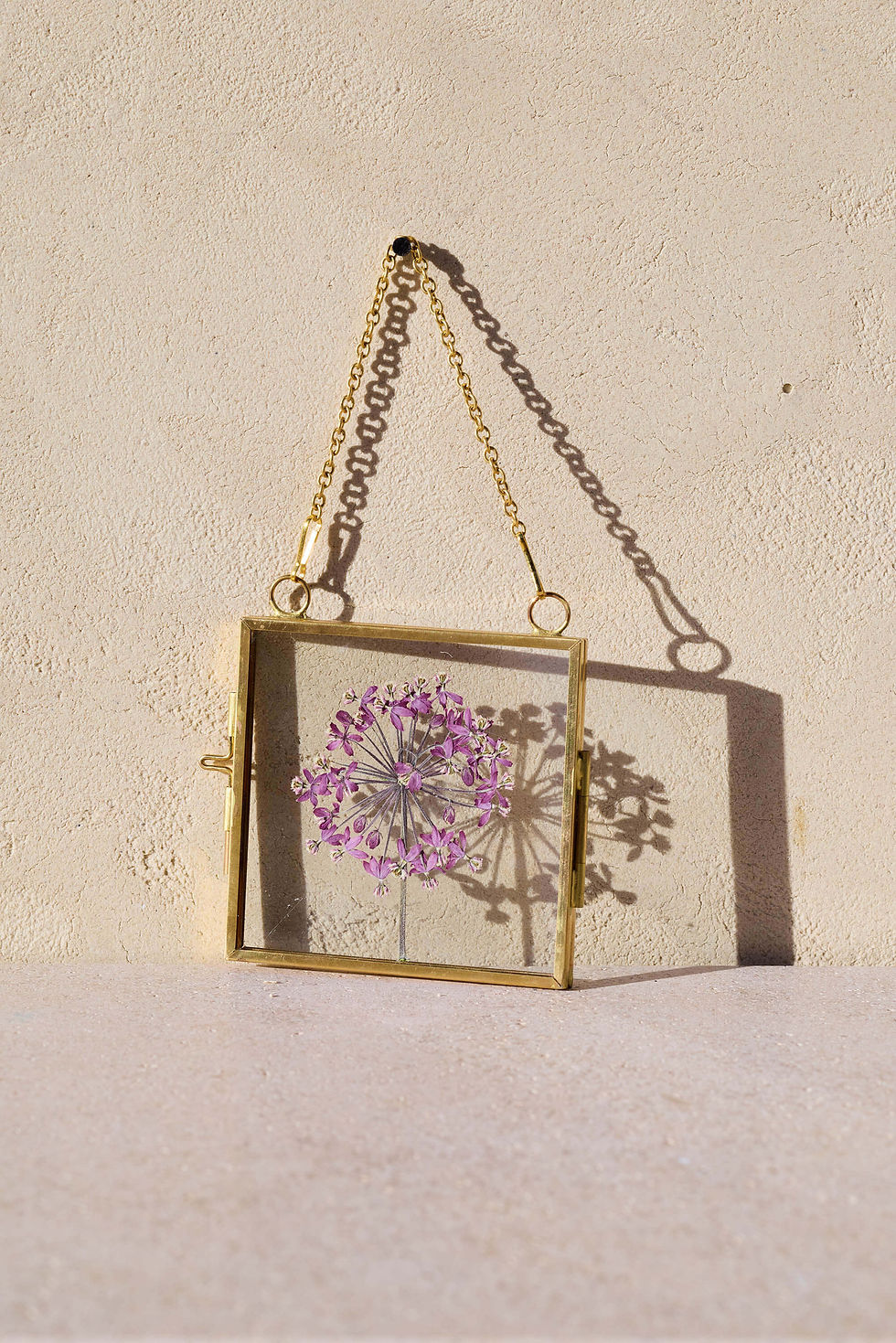


Creating in Times of Struggle
Updated: Mar 30
One of the texts that has resonated with me deeply over the past two and a half years is by the sublime poet, Leah Goldberg, regarding the role of the poet in wartime, from her literary essay, "On that Very Same Subject":
"And hence my deep conviction that the poet is the person who, in days of war, is strictly forbidden to forget the true values of life. Not only is it permissible for the poet to write a love song in days of war, it is a necessity, for even in days of war, the value of love is greater than the value of murder. It is not merely a right for the poet in times of horror to sing to nature, to the blossoming trees, to children who know how to laugh—it is a duty. The duty to remind man that he is still human, that those simple, eternal values exist which make life more precious and death more absolute—death, and not murder. To remind man that at any time and any hour, it is not yet too late to return to being human; for as long as poetry loves humanity in this land and the life upon it, it is worthwhile and fitting for man, too, to love them, to value them, and to protect them."
I began gathering and pressing flowers in the summer of 2023. At the time, those were days of struggle in the streets against the judicial overhaul that stood at our doorstep. The summer heat passed, giving way to the holiday season, until the great disaster of October 7th occurred. From that day, the counting of days began—alongside the greatest civic struggle we have known for the return of our brothers and sisters.
Like so many others, I continue to experience the situation as a jarring, ongoing event that undermines the very foundation of our lives. Most of the work on establishing my studio took place during these past two years—the hardest we have ever endured as individuals and as a society.
Throughout this period, I have been very active in the struggle for the return of the hostages. In November 2024, I joined the silent protest of "Vigil 101" (The Mothers' Guard). Within this space, I am grateful that the studio allowed me to remain in a field of action, expressing the natural world outside through art. During this time, nature managed to cycle through eight (!) seasons, in stark contrast to the frozen experience of time that has persisted since October 7th.
This inconceivable daily reality trickled into my creations. In this post, I will elaborate on a selection of works that give expression to the pain and the profound fracture we have experienced.
Nasturtium / On Memory and a Connection with One Red Thread
On the morning of December 16, 2025, I noticed one of the Nasturtium flowers blooming from seedlings I had planted in the winter. These flowers appear one by one in their own time; I pick them and place them in the press to dry.


Simultaneously, by coincidence, I saw a moving and painful initiative by the family of the late Yael Leibushor, a lookout at the Nahal Oz base, who would have celebrated her 23rd birthday that day. The family invited the public to create the number 23 from natural materials. I read about Yael—one of the heroines we will cherish in our hearts forever—who was a child of nature, with a love for the desert, for people, and for embroidery.
It was clear to me that I would create the number 23 from the leaves and that unique Nasturtium flower I saw that morning. Looking at the delicate, tangled stems intertwined with the embroidered red thread—there is a message for us, for her memory: that the connection will always be there. For the families and children we have lost.

59 / Deconstruction and Reconstruction
This is a piece I worked on in April 2025, during the spring, when the fields outside were filled with the bloom of Wild Carrot (Daucus carota). At that time, 59 hostages were still in captivity.
This work features a single flower, from which I extracted 59 individual florets and reassembled them. On the same paper lie two flowers: the reassembled one and, beside it, the original flower that was deconstructed. This creation holds hope for healing and reconstruction—rebuilt solely from the 59 florets that compose it. Yet, like a scar, the missing core of the original flower will remain there forever.


One of Nathan Alterman's exquisite poems, "On the Great Road" (Baderech Hagdola), accompanied me during this creation, reflecting on the relationship between the forces of nature that continue to fuel the will to live, and the immense pain we carry constantly. This same complexity seeps into the deconstruction and reconstruction of the Wild Carrot:
"The bells in the pasture and whistles, / And a field in gold until evening. / The silence of green wells, / My expanses and the way. / The trees that rose from the dew, / Sparkle like glass and metal. / I shall not cease to look, nor cease to breathe, / And I shall die, and continue to walk."

Stem / The Struggle Headquarters: Cassia Flower
I pressed the Cassia flower at the beginning of the summer. Every passing season over the last two years has painfully marked the passage of time. In October 2025, with the arrival of the last survivors of the final deal, I released this limited edition print with great emotion, full of anticipation and hope. It was a moment I had waited for so long, a moment we fought for.
The stem, for me, symbolizes a steadfast backbone in the struggle. It is the one that carries the flowers—the one that opened, and the others that remained closed.

Wild Carrot Impression
The Wild Carrot continues to intrigue me, and I sought to examine it through an encounter with clay. I met with the talented artist Anat Gopher, and in her studio, I created an impression of the Wild Carrot in clay.
A crack occurred during the drying of the clay, and Anat decided to fire it as it was. The combination of the crack and the sunken imprint of the flower serves as a sorrowful and anxious reflection of those days—the count of days had already reached 700.
